An Alia Studio experiment · October 2026
A chess set carved in volcanic stone.
Mexica Chess is an experiment by Alia Studio. We design brands and websites; we wanted to find out whether a small studio could also make a game — model it in Blender, build it in 3D for the browser, make it fun to play — and give it design that feels Mexican in its material, not in its decoration.
01 · The idea
Two armies of stone.
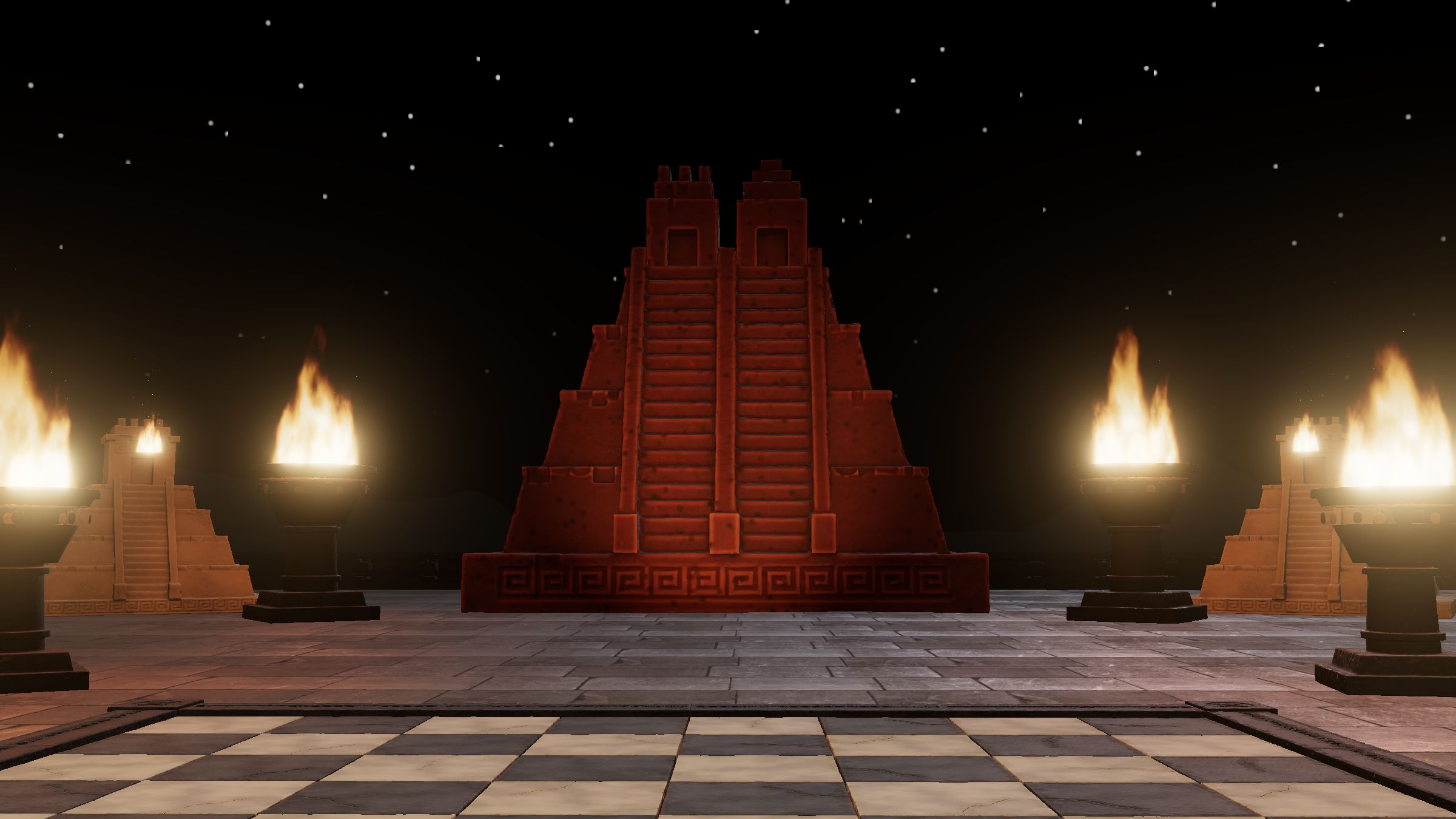
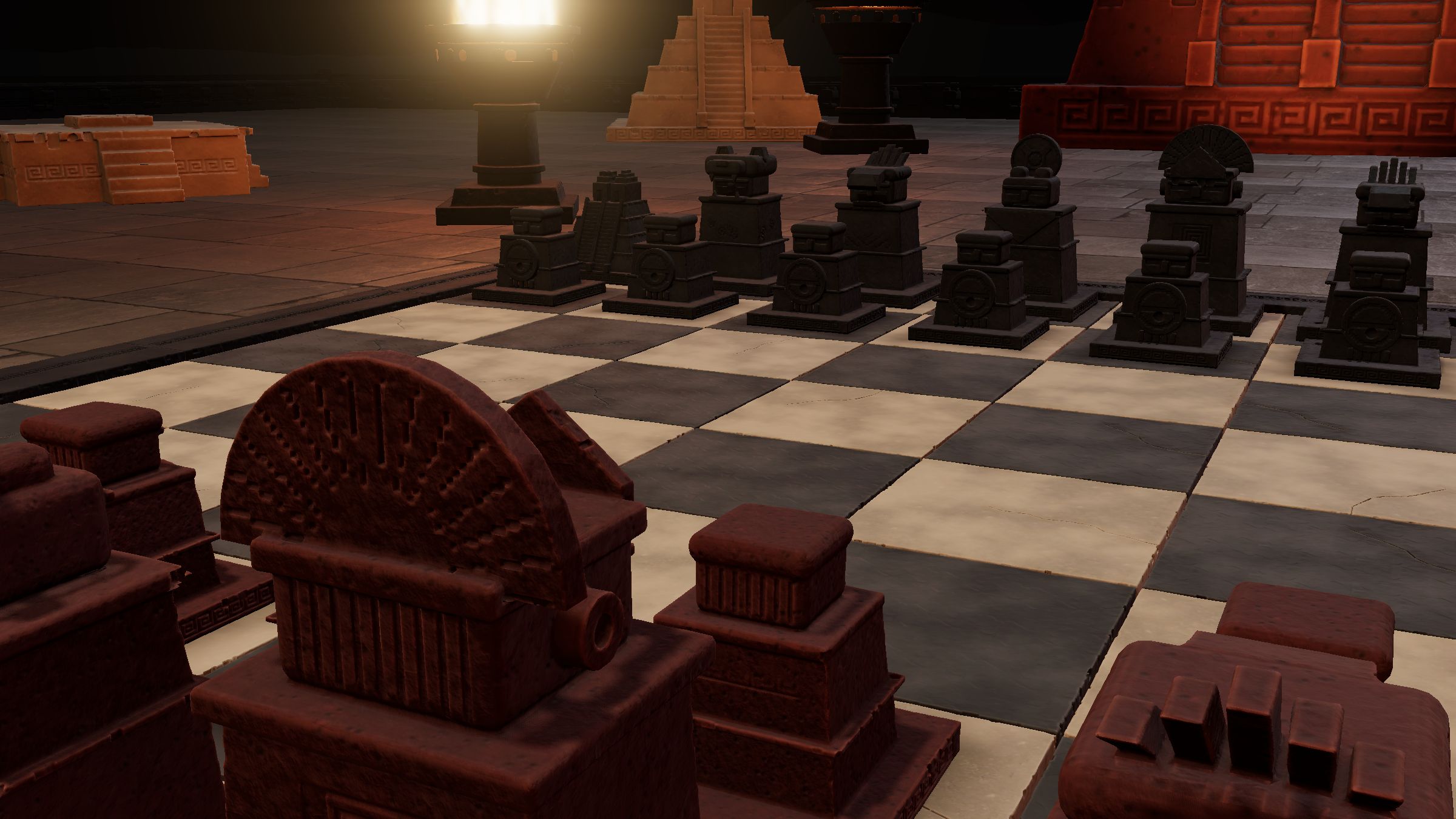
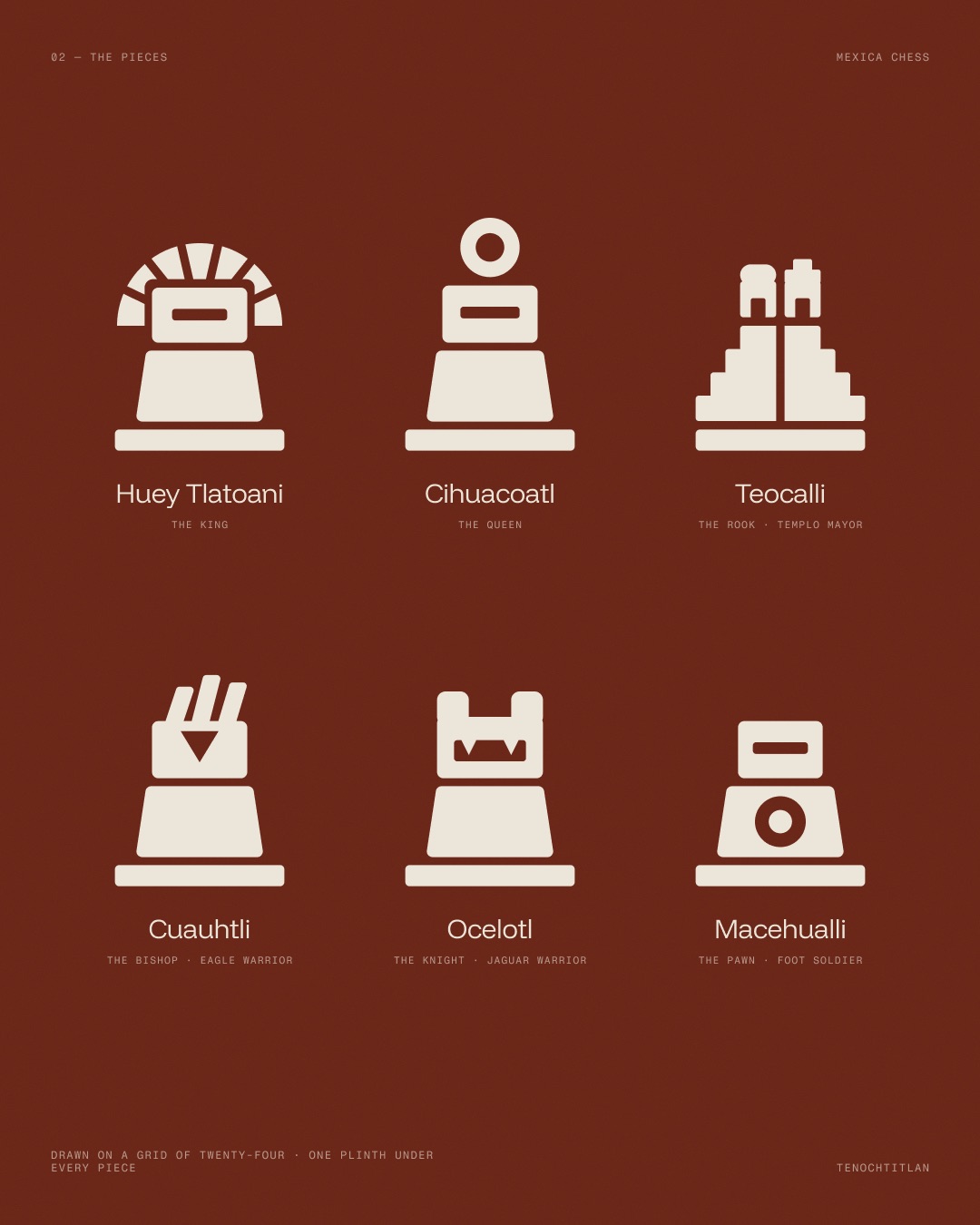
Red tezontle — the porous volcanic rock the Mexica built with, and later the old centre of Mexico City — against black basalt. Each piece is a figure of Mexica society. The Huey Tlatoani, the ruler, is the king. The Cihuacoatl, his second in command, is the queen. The Cuauhtli and the Ocelotl, eagle and jaguar warriors, are bishop and knight. The Teocalli, a temple-pyramid, is the rook. The Macehualli, the commoner who fought on foot, is the pawn.
02 · The mark
Six pieces, drawn flat.
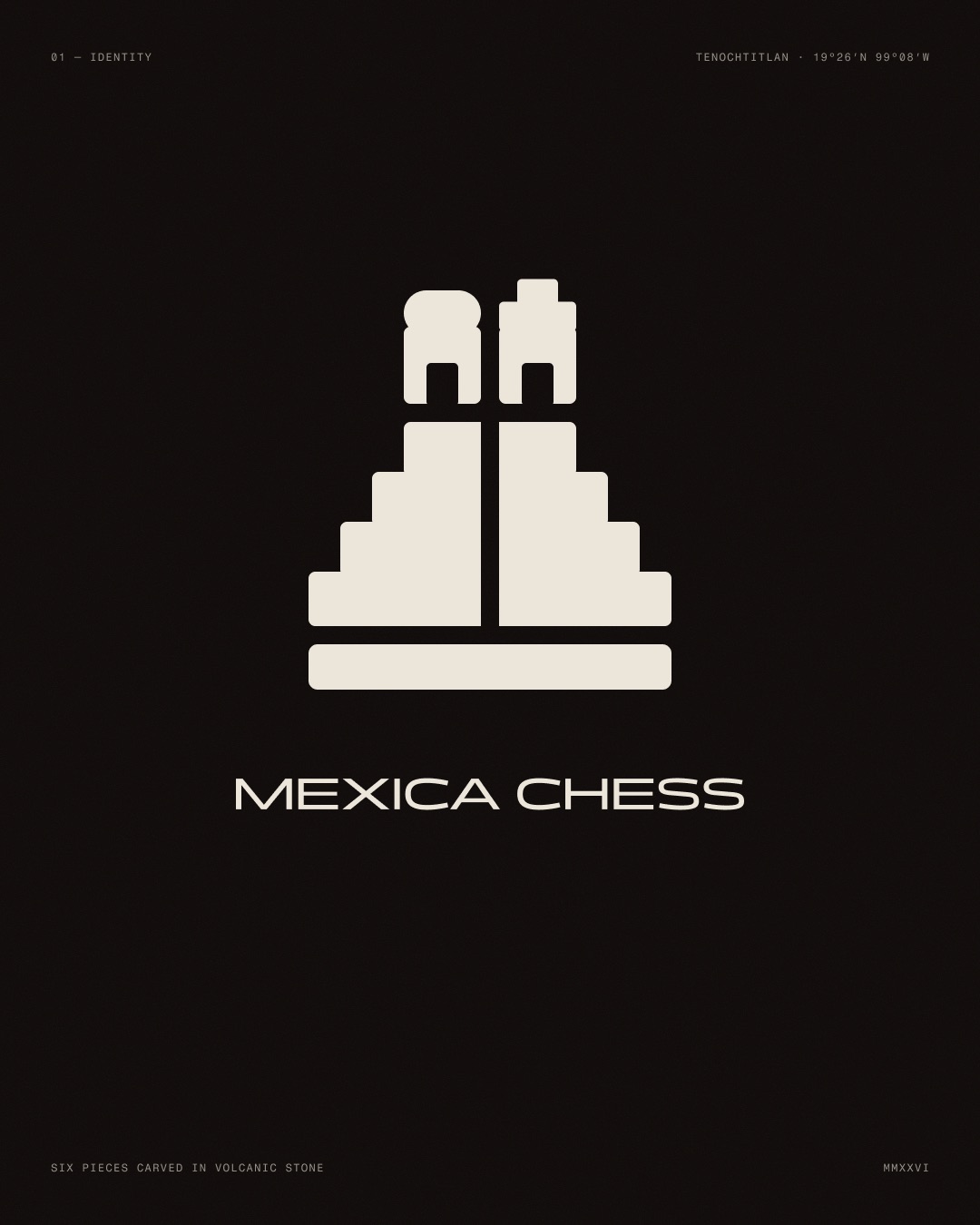
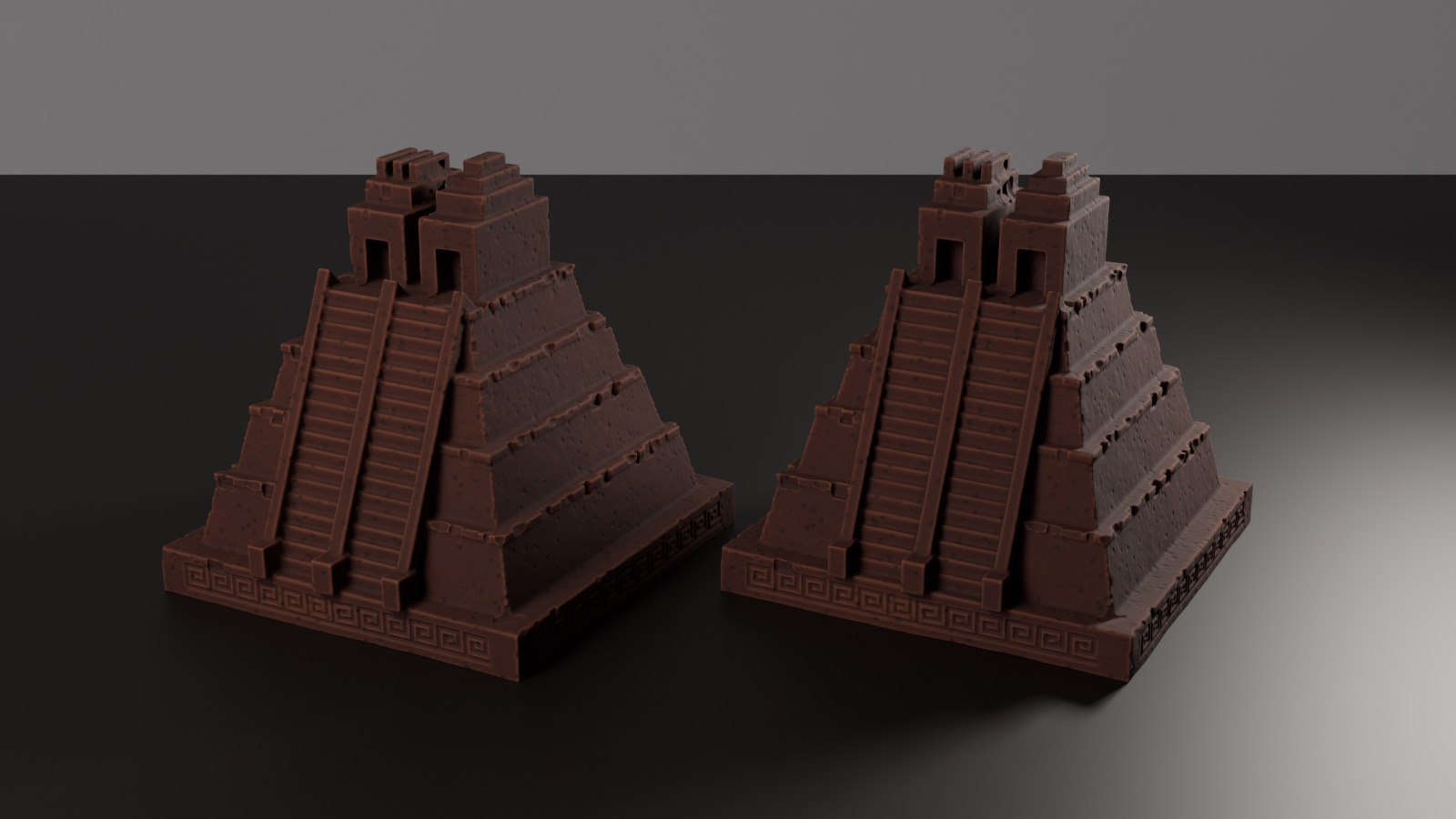
For the set's identity each piece is drawn again as a glyph on a grid of twenty-four: the same plinth under every one, the head telling them apart — the Tlatoani's fan of feathers, the Cihuacoatl's disc, the eagle's crest, the jaguar's ears, the foot soldier's shield. The mark is the Teocalli: the twin shrines of the Templo Mayor, Tlaloc's and Huitzilopochtli's, split by the stair. While the game loads it rises in seven stages, as the real temple was rebuilt seven times, each over the last.
03 · Carved in Blender
Every piece is a script.
Nothing here is a stock model. Each piece is a short Python script for Blender that describes its masses and its carvings: stepped grecas, faces, feathers, jaguar rosettes, the double shrine of the Templo Mayor. Blender joins the masses, cuts the reliefs, knocks chips off the edges, softens every cut a little and weathers the surface, like stone handled for centuries.
A lighter copy is then baked from that carving — colour, roughness, surface detail and shadowed hollows — using photographed rock (Poly Haven, CC0) turned into tezontle and basalt: gas bubbles in the red stone, edges polished by handling, dirt in the recesses. In the browser a fine stone grain is laid over the bake, so the surface holds when you walk right up to it.
04 · Stone that breaks
A capture is a blow.
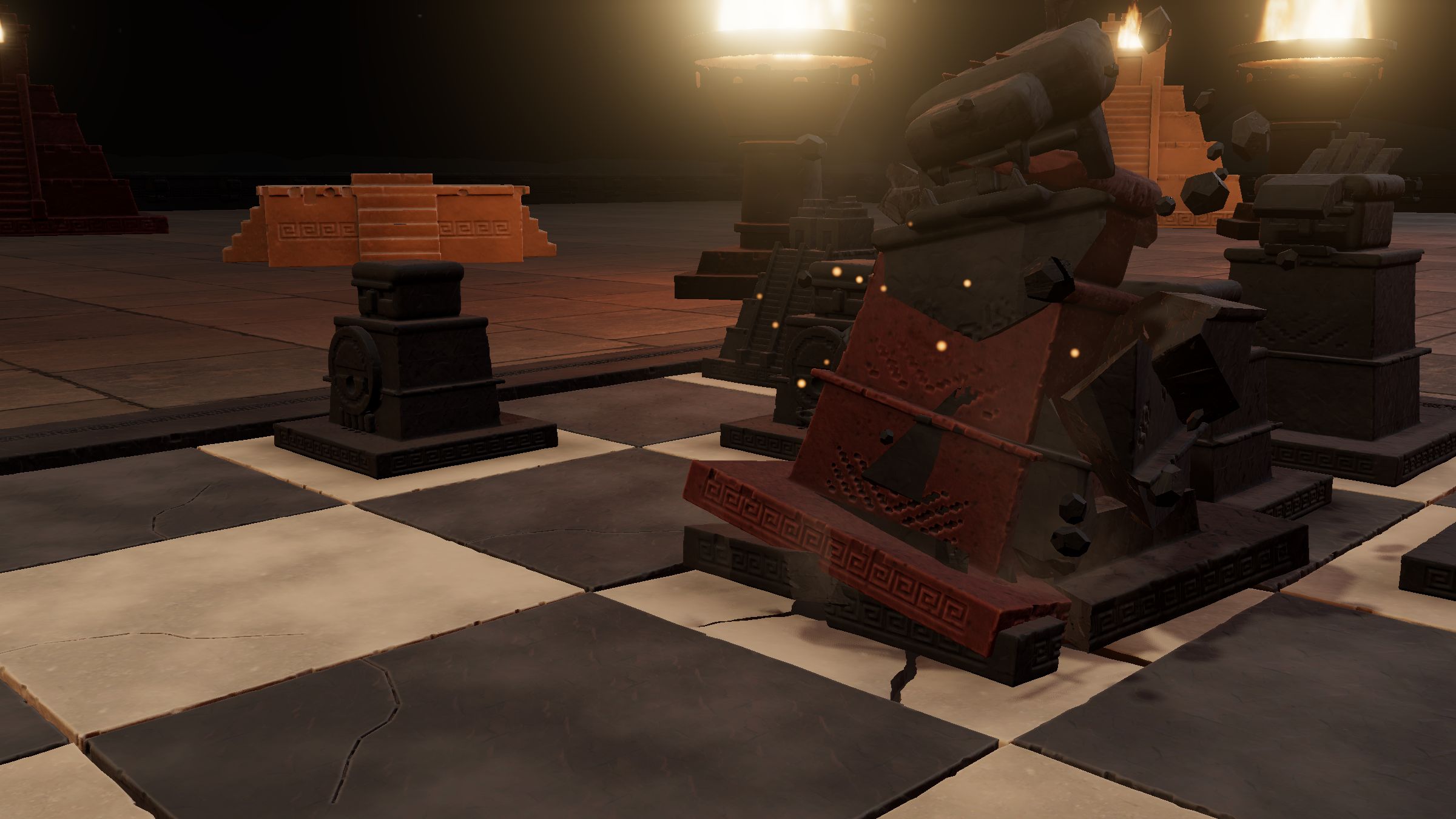
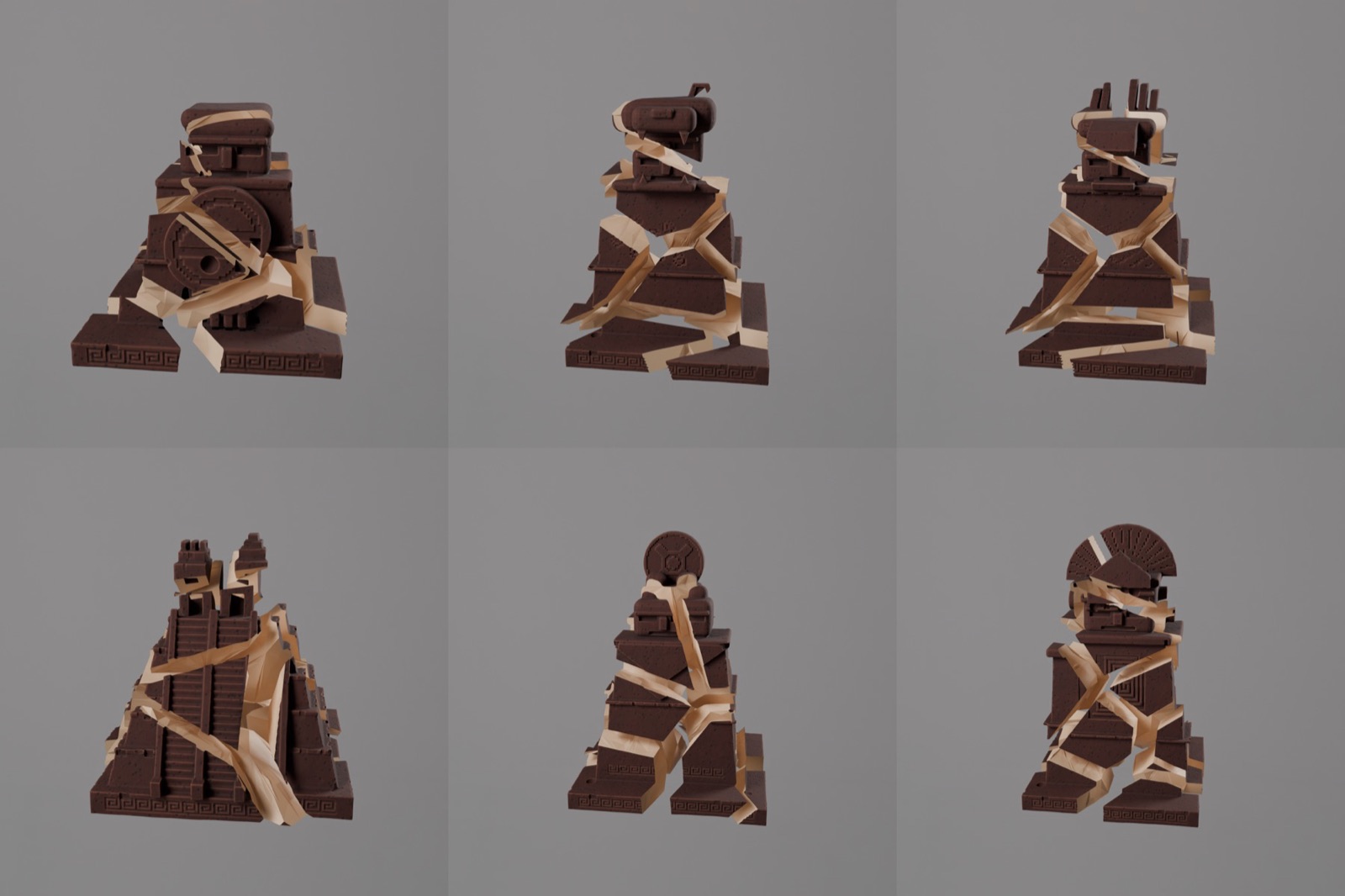
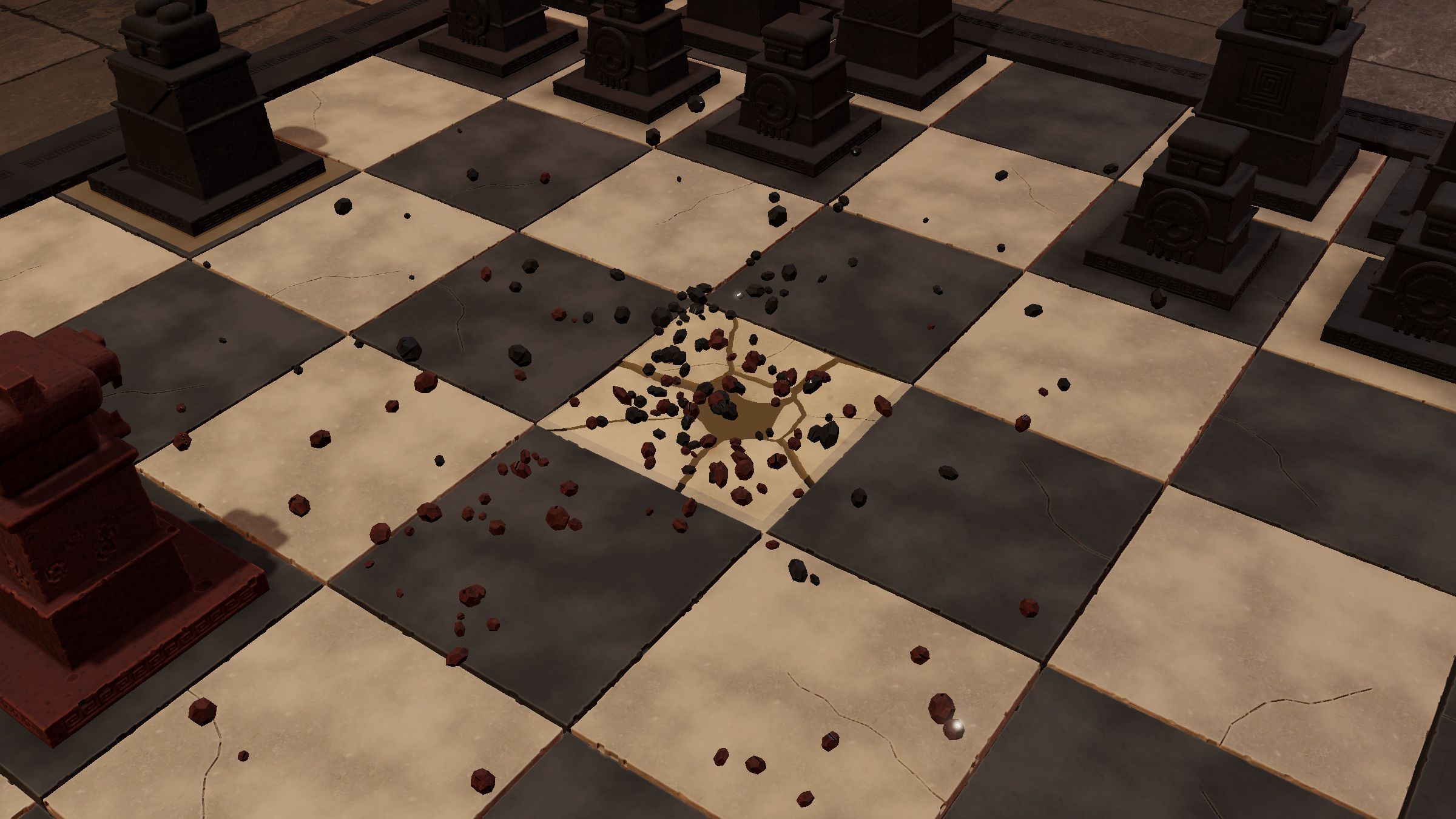
Every piece was broken in advance in Blender, cut into chunks whose fresh faces are raw stone. When one is taken it bursts along the line of the attack; the chunks tumble, knock against the pieces still standing, settle, and crumble into dust. The grit stays where it fell for the rest of the game. The floor gives way too: the first blow cracks the slab, a second shatters it into a crater. A big capture cuts to a low camera and slows time for a beat. At checkmate the king comes down, and his army goes down with him: one stone after another tips away from where he fell and breaks as it goes over. Undo, or a new game, runs it backwards: the slabs rise level, the bits fly back into their craters, and every broken stone gathers itself out of its own rubble, from the plinth up.
05 · Two places
A plaza, and a summit above the forest.
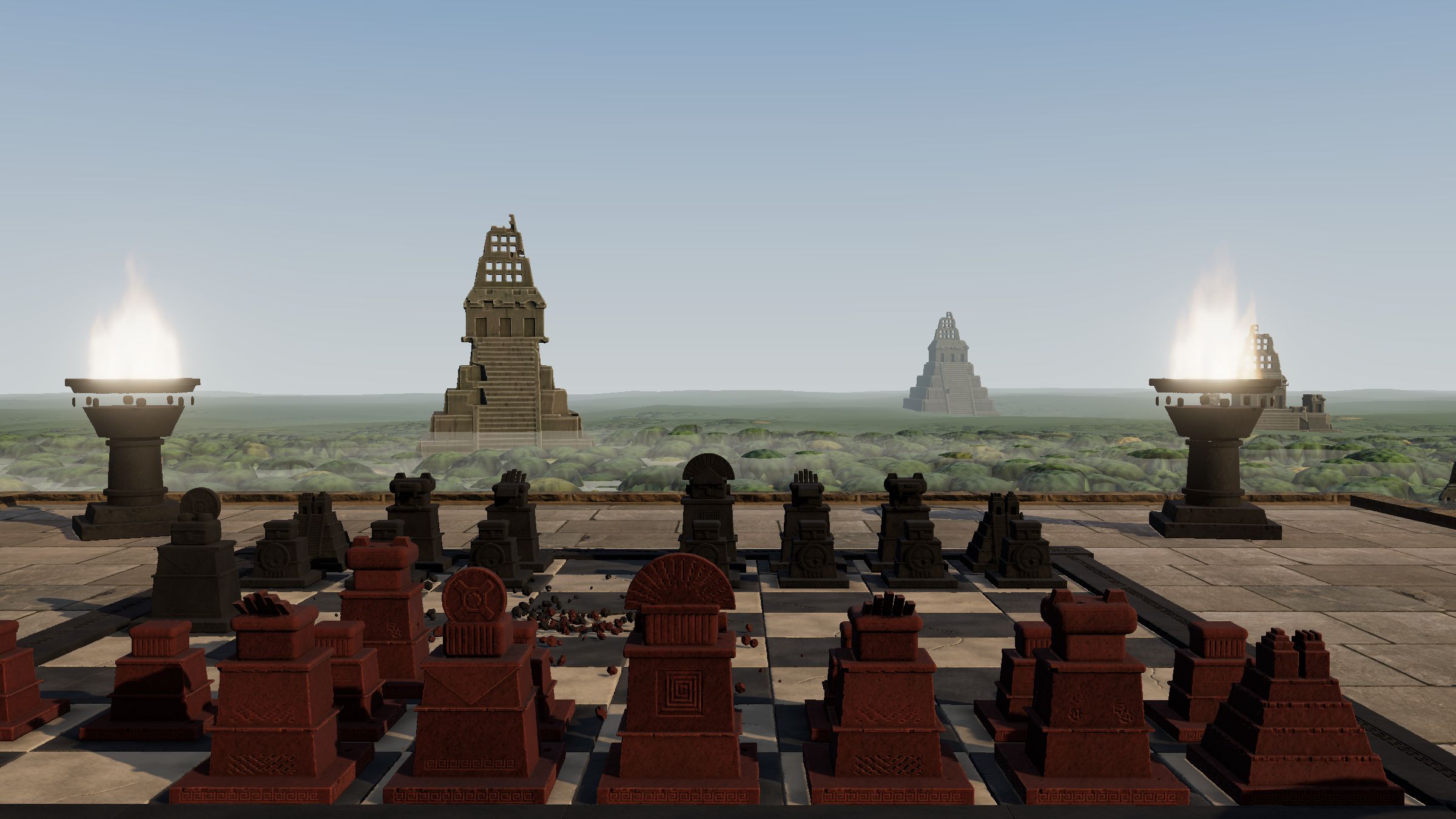
Play on the plaza of the sacred precinct of Tenochtitlan, between the Templo Mayor, its shrines and the serpent wall — at night by the braziers, or at the golden hour. Or on the summit of a temple at Calakmul, in Campeche, with the canopy below, mist in the trees and other temples breaking through it. Neither is a reconstruction: they are sets built in the spirit of the places. The temples in the trees were carved in Blender like the pieces — a tall temple of the Petén and a great acropolis after Calakmul's Structure II, both as ruins. You can also come down from the overview and walk the board among the pieces.
06 · Sound and the machine
Real recordings, a real engine.
Every sound is a recording, nothing synthesised: stone grinding on stone, rock cracking, fire, the night, the forest and its howler monkeys, the wind on the summit — all released into the public domain on Freesound, plus one Kenney pack. Each sits in the scene, so a capture across the board sounds across the board.
The opponent is Stockfish 19, the open-source chess engine, compiled to WebAssembly and running entirely in your browser at three levels. Or play a friend on the same screen: the board turns to whoever moves next.
07 · Learn to play
From foot soldier to Tlatoani.
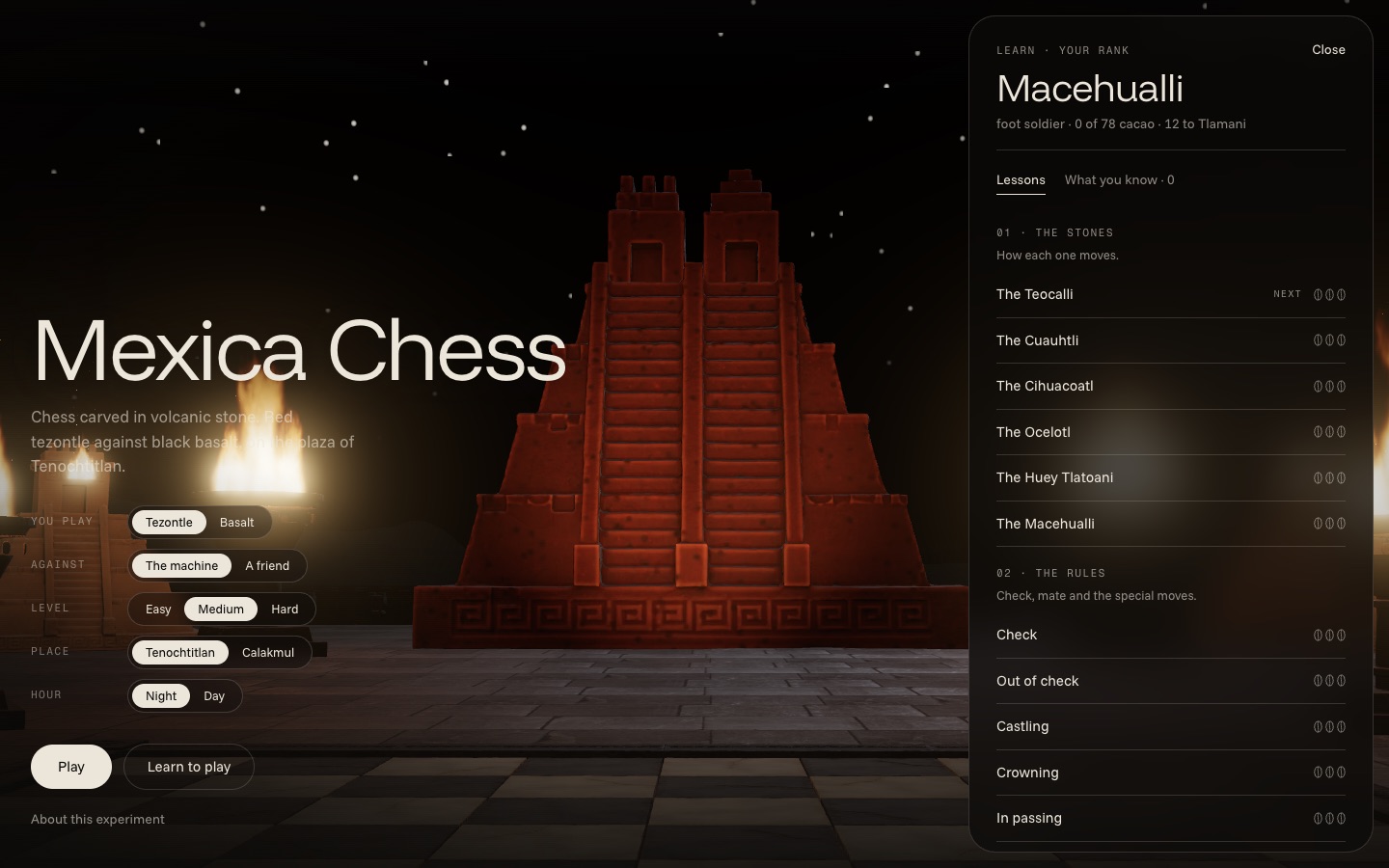
Twenty-six lessons on the same board: how each stone moves, the rules, tactics, mates against the machine and a little strategy. Every position and every answer was checked with the engine. A lesson earns up to three cacao beans — the small change of the Mexica — and the beans add up to a rank. Your progress, and the rule each lesson taught you, stay in this browser.
08 · Made with
Blender 5.2 and Python for the stone; three.js for the 3D; chess.js for the rules; React, Vite and Tailwind for the rest. Type: Funnel Display, Funnel Sans and Fragment Mono. Designed and built by Alia Studio, with Claude Code.
- Stone scans
- rock_05, dark_rock, large_grey_tiles, mossy_sandstone — Poly Haven, CC0.
- Sounds
- Freesound and Kenney, CC0. Every recording and its author.
- Chess engine
- Stockfish 19, WebAssembly build by Nathan Rugg, GNU GPL v3 — licence, source at official-stockfish/Stockfish and nmrugg/stockfish.js.
- Fonts
- Google Fonts, SIL Open Font License.
- This game
- The code and the Blender scripts, under the MIT licence: github.com/alrc21/mexica-chess. The models, textures and images are © Alia Studio, CC BY-NC 4.0.